
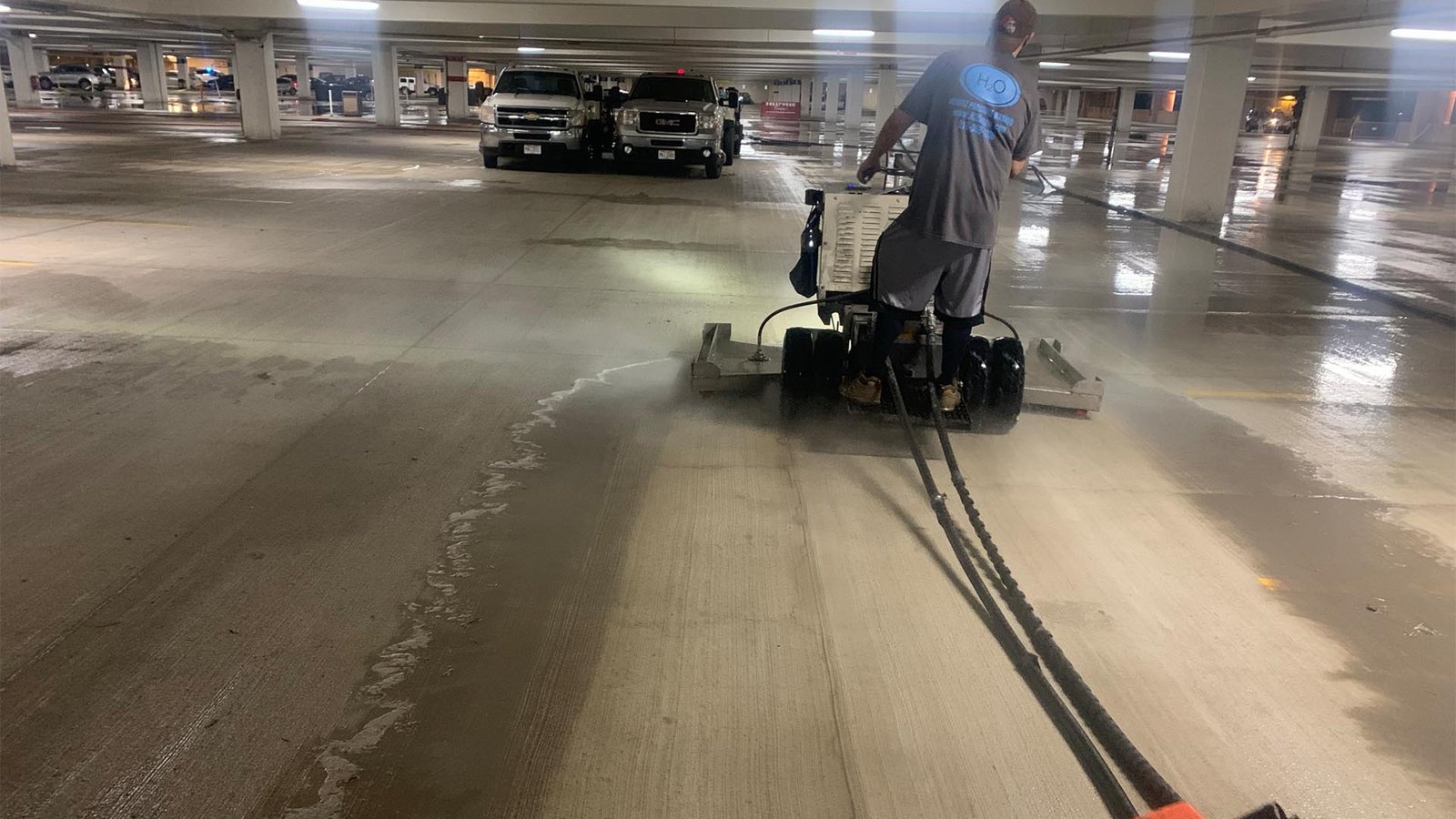
When a power washing contractor runs water across your parking garage or loading dock and it flows into a drain, that discharge is subject to California and federal environmental regulations that most facility managers don't fully understand — and that create direct liability for property owners and operators, not just the cleaning contractor.
The Regulatory Framework
Clean Water Act — Section 402 NPDES Permit
The federal Clean Water Act prohibits discharge of pollutants into navigable waters without an NPDES permit. California's State Water Resources Control Board administers this program and has established specific guidance for commercial cleaning operations. Key provisions for Bay Area facilities:
- Stormwater that contacts petroleum products (oils, fuels, hydraulic fluids) becomes regulated discharge
- Discharge of this water to storm drains, surface waters, or groundwater is prohibited without permit
- Facility operators share responsibility for discharge that occurs on their property
California Phase II Small MS4 Permit
Bay Area municipalities operate Municipal Separate Storm Sewer Systems (MS4s) under Phase II permits. These permits require municipalities to implement programs to prohibit illicit discharge — and the enforcement arm of this reaches commercial property operators who permit contaminated discharge on their premises.
Bay Area Regional Water Quality Control Board
The San Francisco Bay Regional Water Quality Control Board has specific enforcement authority over commercial cleaning discharges in the nine-county Bay Area. Enforcement actions range from warning letters to fines that can reach $10,000 per day per violation.
What This Means in Practice
Parking Garage Cleaning
Parking garage wastewater is almost always petroleum-contaminated — motor oil, hydraulic fluid, brake fluid, and fuel accumulate on concrete surfaces. This water:
- Cannot be discharged to storm drains
- Must be contained at the point of generation
- Must be collected and disposed of at an approved facility, or treated on-site if permitted
Industrial Facility Cleaning
Wastewater from cleaning manufacturing areas, loading docks, and industrial floors may contain oils, solvents, heavy metals, or other regulated substances. The discharge characterization depends on what soiling is present — a pre-cleaning assessment of likely discharge composition should inform containment requirements.
Commercial Food Service Cleaning
Cooking grease and food waste are organic pollutants that create oxygen-depleting conditions in waterways. Restaurant and food service cleaning wastewater containing grease must be handled appropriately — high-fat organic discharges are a common enforcement focus in Bay Area stormwater programs.
⚠️ Liability exposure: Property owners and facility operators can be held liable for illegal discharges by contractors working on their premises. "The contractor did it" is not a complete defense under California environmental law. Ensure your cleaning contractor has a documented wastewater management plan before work begins.
What Compliant Wastewater Management Looks Like
- Pre-job assessment: Evaluate likely discharge composition based on surface soiling and cleaning products
- Drain blocking: Block storm drain inlets before cleaning begins
- Containment: Use berms, booms, or vacuum extraction to contain and collect wastewater
- Disposal: Discharge collected wastewater to sanitary sewer (with local utility approval) or transport to approved disposal facility
- Documentation: Record the wastewater volume, disposal method, and disposal facility
Questions to Ask Your Cleaning Contractor
- What is your wastewater containment method for this facility?
- How do you dispose of collected wastewater?
- Do you have a documented wastewater management plan?
- Can you provide disposal documentation for our environmental compliance records?
Any contractor who cannot answer these questions clearly should not be working on petroleum-contaminated or chemically-complex cleaning projects in California.