
Bay Area construction projects operating on sites one acre or larger are required to obtain coverage under the California Construction General Permit (CGP) administered by the State Water Resources Control Board. This permit creates specific stormwater pollution prevention obligations that include site cleaning as a compliance tool — and creates liability for general contractors and project owners who don't manage stormwater adequately.
The California Construction General Permit
The CGP requires construction sites to develop and implement a Stormwater Pollution Prevention Plan (SWPPP) that includes Best Management Practices (BMPs) for controlling polluted runoff. Construction cleaning is directly relevant to several BMP categories:
- Vehicle and equipment cleaning: Concrete washout must be managed to prevent discharge; equipment washing must use appropriate containment
- Soil stabilization: Exposed soil and aggregate must be managed to prevent erosion into stormwater systems
- Non-stormwater management: Concrete mixing water, mortar, plaster, and similar construction fluids must be contained
- Material handling and waste management: Construction debris must be managed to prevent pollutant discharge
Concrete Washout: A Specific Compliance Requirement
Concrete washout is one of the most significant and commonly violated stormwater compliance requirements on Bay Area construction sites. Concrete and mortar washout water has a very high pH (12+) that is toxic to aquatic life and that violates basin plan objectives for receiving water quality.
The CGP requires that concrete washout water be:
- Contained in a designated washout area — never allowed to run to the street or storm drain
- Retained until it solidifies, then disposed of as solid waste or to a licensed concrete disposal facility
- Managed to prevent overflow — sufficient capacity for the volume generated
High-pressure washing of concrete equipment and forms on-site without adequate containment is one of the most common enforcement triggers for Bay Area construction stormwater inspectors.
Pre-Occupancy Building Washing
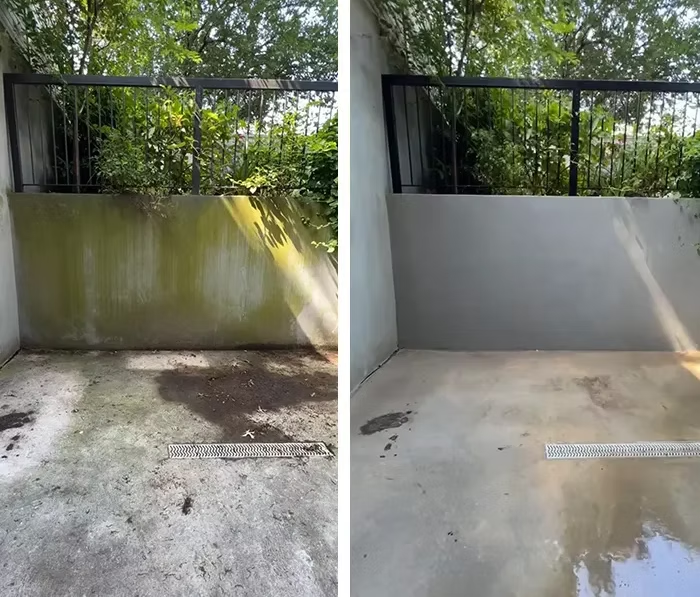
Construction projects in the Bay Area commonly require exterior building washing before final inspection and occupancy. This washing removes construction dust, concrete overspray, paint drips, and general construction soiling from building facades, windows frames, and paved surfaces. Properly timed and executed, this cleaning:
- Prepares the building for final inspection
- Removes surface materials that would otherwise become stormwater pollution post-occupancy
- Allows detection of facade defects obscured by construction soiling
🏗️ For general contractors: Schedule pre-occupancy washing early enough that any facade defects identified during cleaning can be addressed before final inspection. We commonly identify cracked caulking, mortar voids, and coating defects during building washing that would otherwise be discovered post-occupancy — when repair costs and scheduling are more disruptive.
Enforcement Landscape in the Bay Area
Bay Area stormwater enforcement involves multiple agencies:
- State Water Board: Administers CGP and has direct enforcement authority
- Regional Water Quality Control Board: San Francisco Bay Region has active construction stormwater inspection program
- Municipal programs: Cities including San Francisco, San Jose, and Oakland conduct independent stormwater inspections
Penalties for CGP violations start at $1,000 per day and can reach $25,000 per day for serious violations. Project owners — not just contractors — can be held liable. The cost of compliance significantly undercuts the cost of enforcement action.